Tag: facade
-

How to Design an Expanded Mesh Architectural Facade
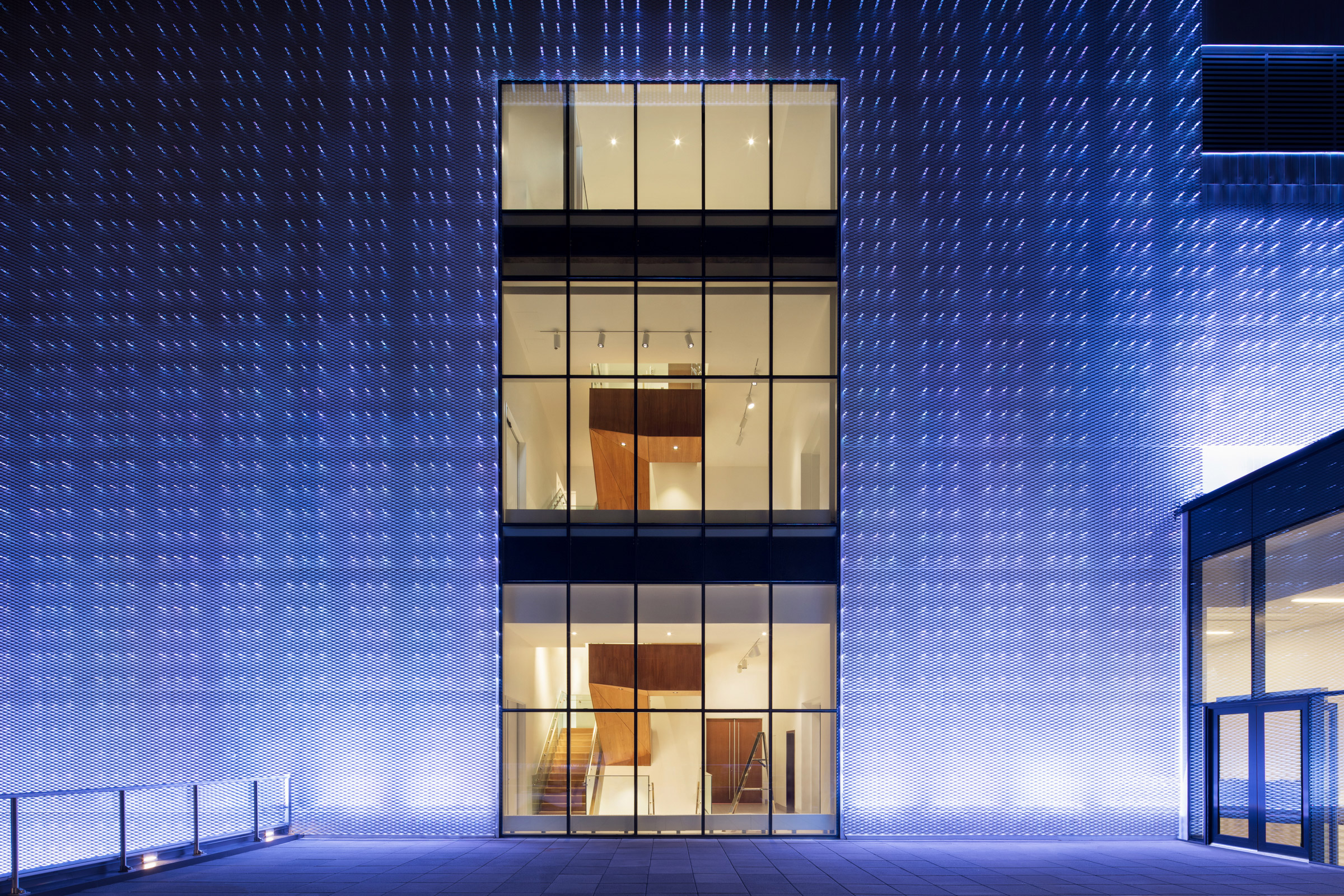
What are Some Use-Case for Architectural Expanded Mesh in Facade Design? How to Select an Architectural Expanded Mesh After defining the application, there are typically three factors that architects and interior designers use to select the style of expanded mesh: How to select a Finish for your Architectural Expanded Mesh Defining your warranty level is…
-

Critical to Quality Features for Architectural Expanded Mesh
Expanded metal manufacturing has been a well-established process for many years; however, there are important details in the manufacturing process that ensure the expanded mesh meets the quality standards for architectural applications. Here are a few questions you need to ask your expanded metal partner to ensure a quality installation: Do you trim the outside…
-

Architectural Sunshade Fin Testing – Break Forming Expanded Mesh to Add Rigidity
Expanded mesh can be more than a flat surface. Break forming (or bending) expanded mesh is a straightforward process and should be a design element that any architect feels free to explore. Pictured here in this mockup is Bellesa expanded mesh, which is break-formed to create a sophisticated sunshade form that gives the metal an…
-

Case Study: Architectural Metals for Residential Spaces
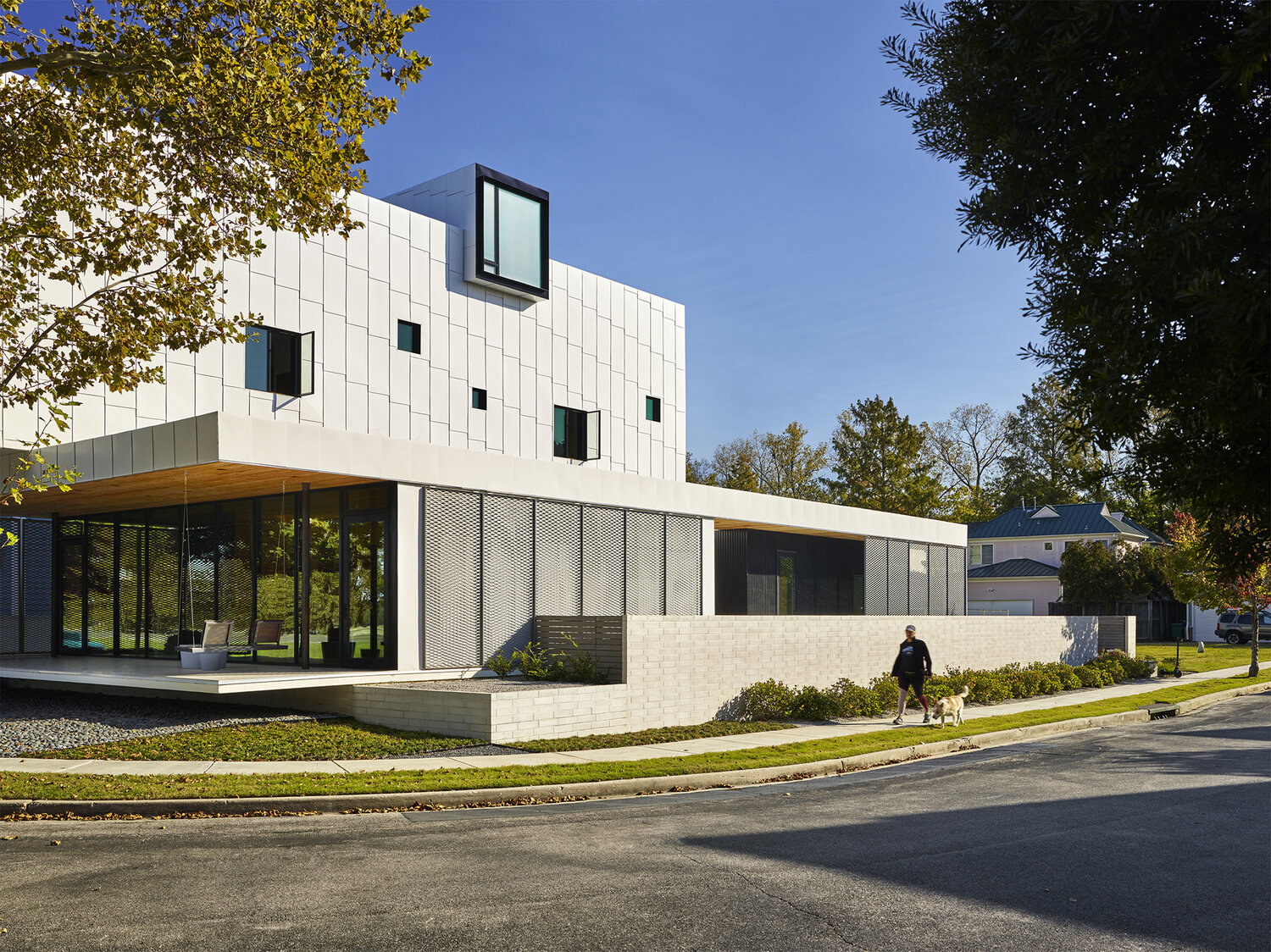
Architectural metals like expanded mesh, perforated metal, and laser cut panels are a road less traveled in residential home design, but are gaining popularity and offer many great design opportunities. Where do you find these materials used? Outdoors, you’ll find these materials used as privacy screens, sunshades, or garden trellis. In contrast, on the inside,…
-

What should an architect specify behind an expanded mesh facade?
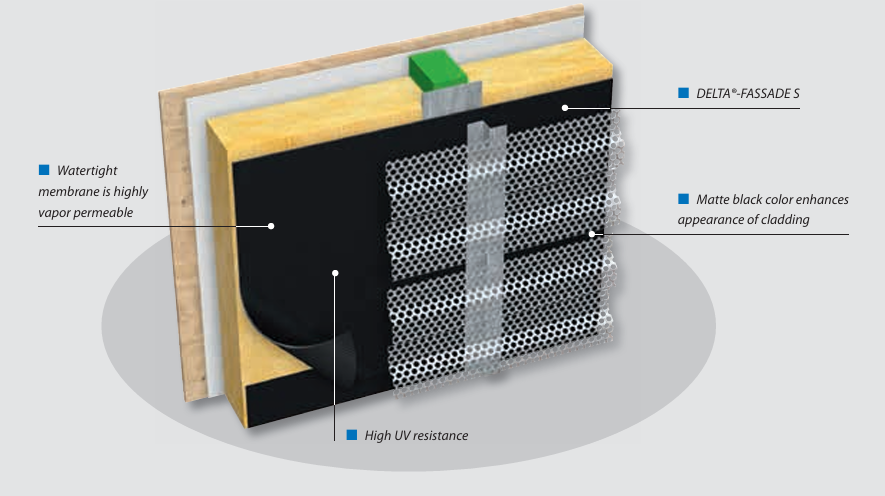
An extremely common question we get asked at AMICO is… What should the architect specify behind the expanded mesh facade? Because all forms of expanded mesh are open to some degree, the surface behind the mesh needs to be water-tight to protect the insulation and prevent water from getting trapped behind the wall. The question…
-

Quantifying Passive Sunshade Heat Gain Reduction
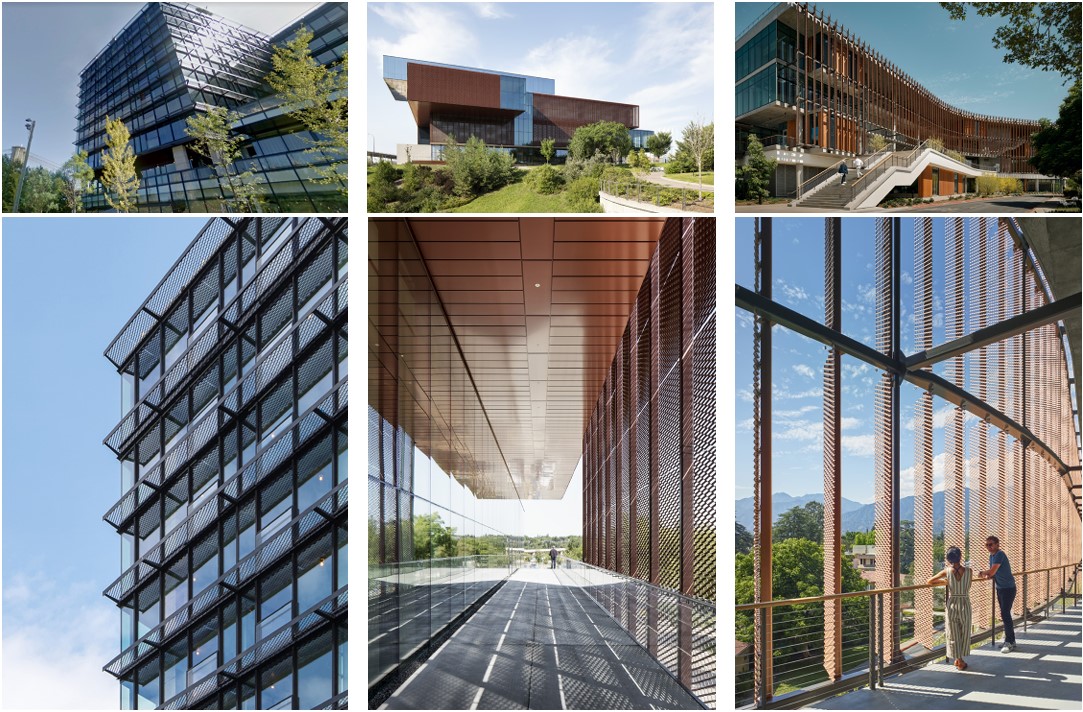
A long-standing practice of architects is to utilize architectural metals as a sunshade element to reduce glare, improve the quality of experience inside a building, and of course, to reduce heat gain. Typically, these designs are approached in three different ways: