
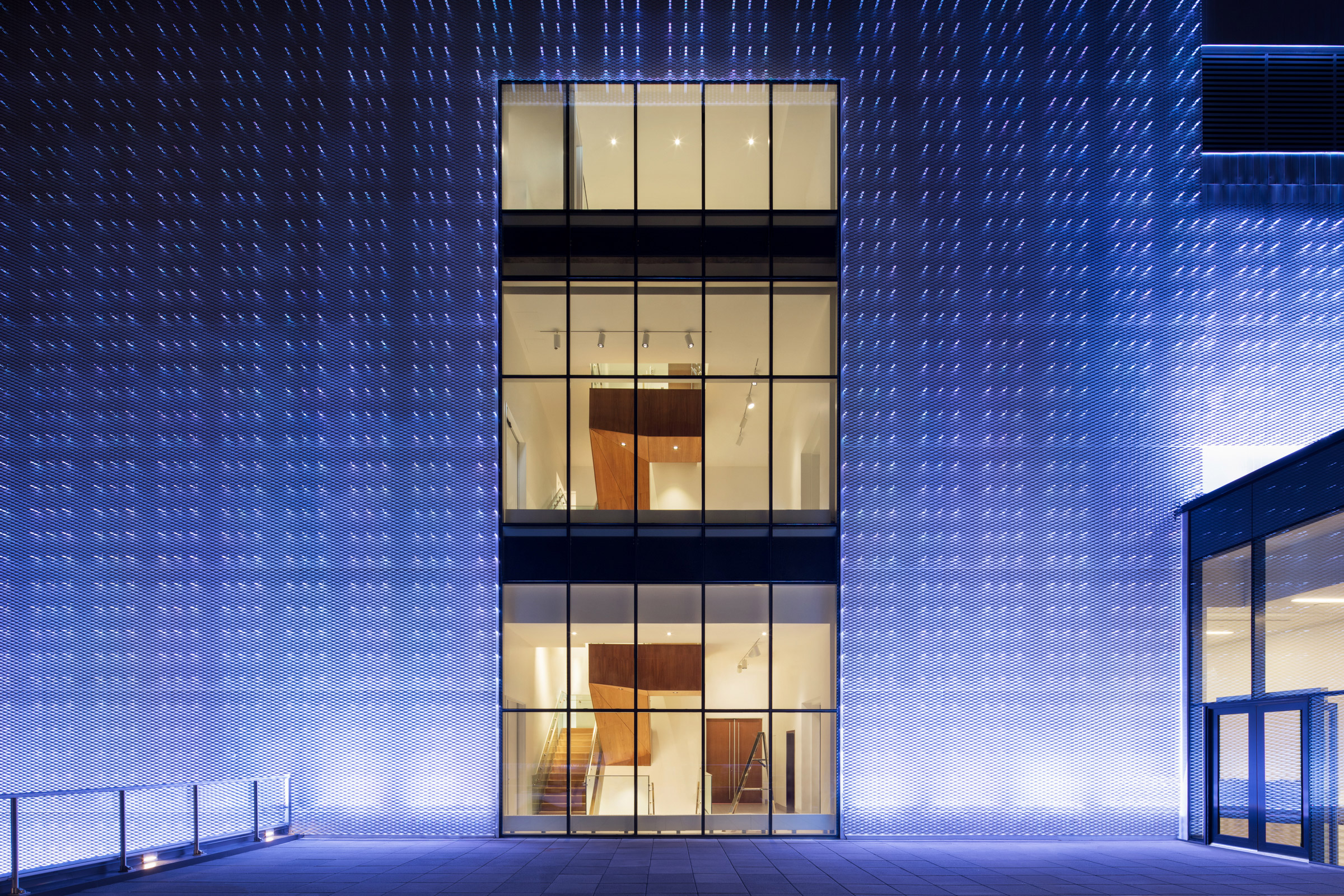
What are Some Use-Case for Architectural Expanded Mesh in Facade Design?
- Bring color and texture to your facade design
- Visually break up monotonous glass
- Reduce head gain inside a building as a sunshade
- Create unique lighting moments
- Use the material sculpturally to bring form and shape to your facade design
- Cover equipment and other eye-sores
- Create feature wall moments
- Provide surrounds for exterior stairwells.
- Provide a base for signage
- Provide plant growth supports
How to Select an Architectural Expanded Mesh
After defining the application, there are typically three factors that architects and interior designers use to select the style of expanded mesh:
- Appearance – find the mesh style that you think has the best appearance. APEX01, APEX03, Siro, and APEX04 are among our most popular meshes because their large strands create a noticeable visual impact on the facade design.
- Visual Opacity – Depending on your application, you will want more or less opacity. Depending on those objectives, you may select some meshes over others. Below is a table showing AMICO meshes and their openness. Visual open area describes the panel’s openness when viewed perpendicular to the full sheet.
- Airflow – If your project relies on airflow, such as in equipment screens or parking garage applications where air and heat need to flow through the mesh, you should consider the “mechanical open area.” This term describes the mesh’s openness when viewed perpendicular to the mesh opening.

How to select a Finish for your Architectural Expanded Mesh
Defining your warranty level is a good first step, but the decision will ultimately be translated into a specification for AAMA 2604 or 2605. Click here to read in detail about selecting between those two finishes.
How to Attach Expanded Mesh to a Facade
A great way to speed your design process is to share your design intent with AMICO and let our team develop an attachment design. If you have your design intent, begin discussions today with an AMICO team member.
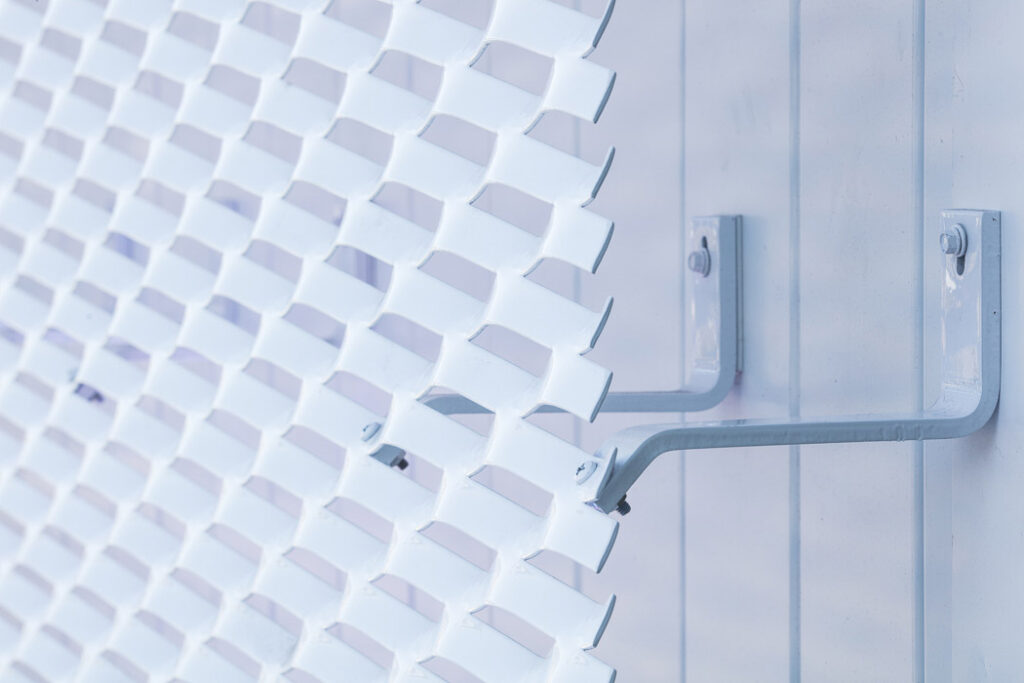
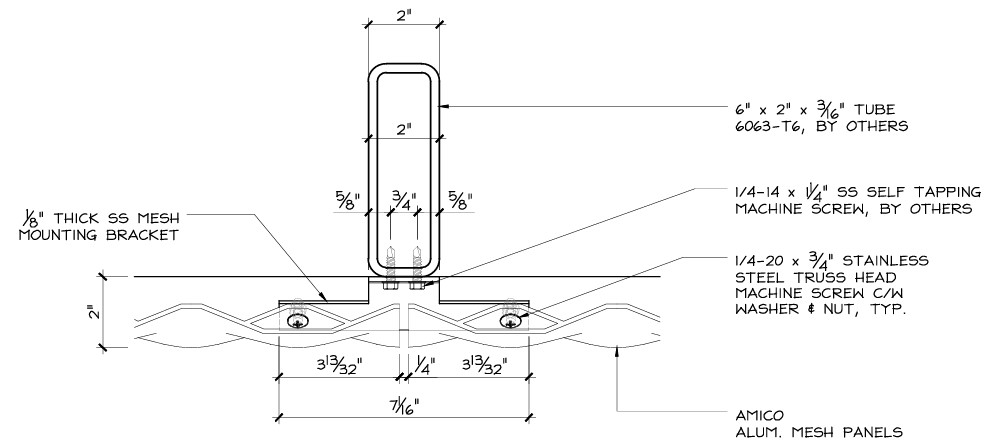
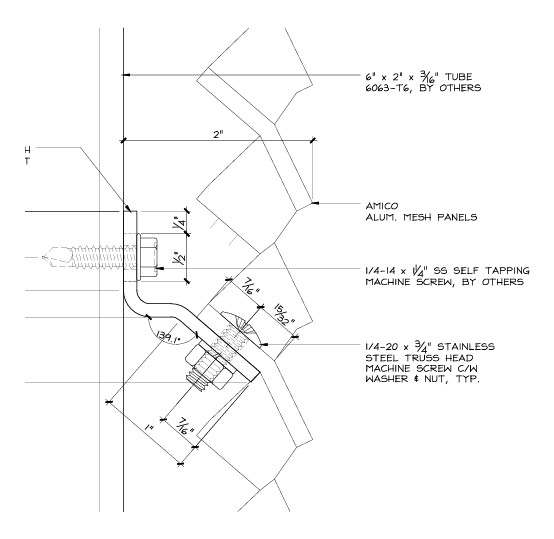
Oftentimes, expanded mesh is attached via L-shaped brackets with angled ends that match the pitch of the expanded mesh. The brackets are custom laser-cut, allowing for significant customizability to adjust the offset and meet various design criteria. Click here to download a PDF of some common attachment details.
How to Read Expanded Mesh Load Tables
AMICO offers pre-calculated load tables to help you determine the optimal spacing of attachment points. All you will need to begin this process is a specification for the pressure in pounds per square foot that you anticipate on your mesh. Once you have your PSF spec, locate the corresponding colored line in the example chart below. The X-axis represents the spacing of the vertical support rails, and then the corresponding point on the line represents the space between the brackets, vertically up the support rail. In this example chart for APEX01 5005-O temper 1/8″ aluminum, a 25lb PSF specification (dark blue line) would allow the supports to be 48″ apart (x-axis) with attachment brackets every 10.5″ vertically (y-axis).

How to Finish Outside Corners and Edges
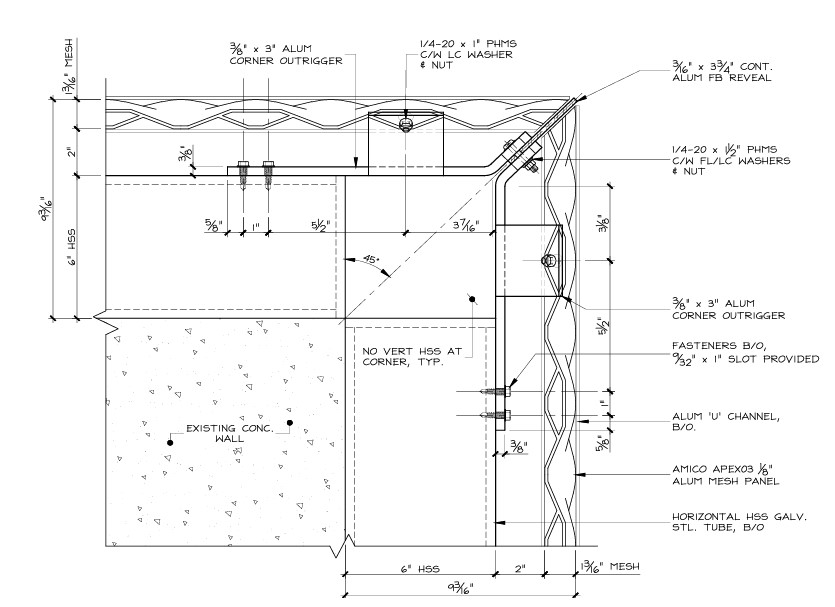
Outside corners are a common design element that you will need to develop for your facade. Below is a common approach to finishing a corner with expanded mesh. This design approach involves using a piece of vertical bar stock to create a crisp edge, and the mesh is then miter-cut to terminate into the bar, resulting in a clean and straightforward finishing detail.
What about added fabrication options?
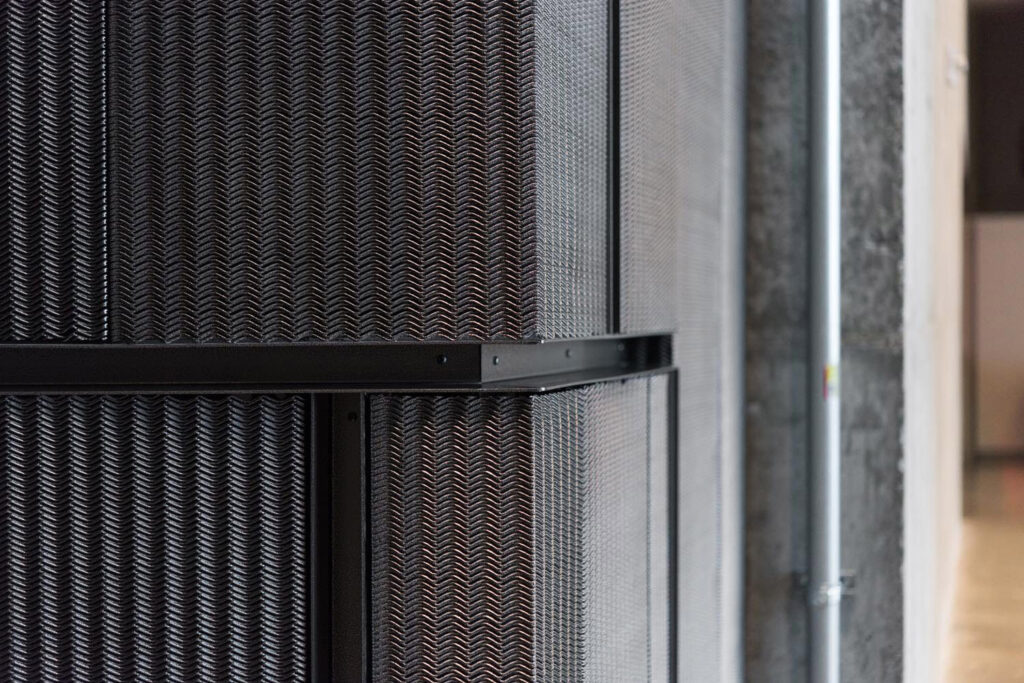
As you begin to conceptualize your surface and imagine different offsets, reveals, or other features, you should feel empowered to incorporate those into your design and be able to lean on AMICO to help you detail and then fabricate the design elements. As with all great design, beauty in simplicity will also help you meet budget targets.
Tips for Lighting and Expanded Mesh Facade
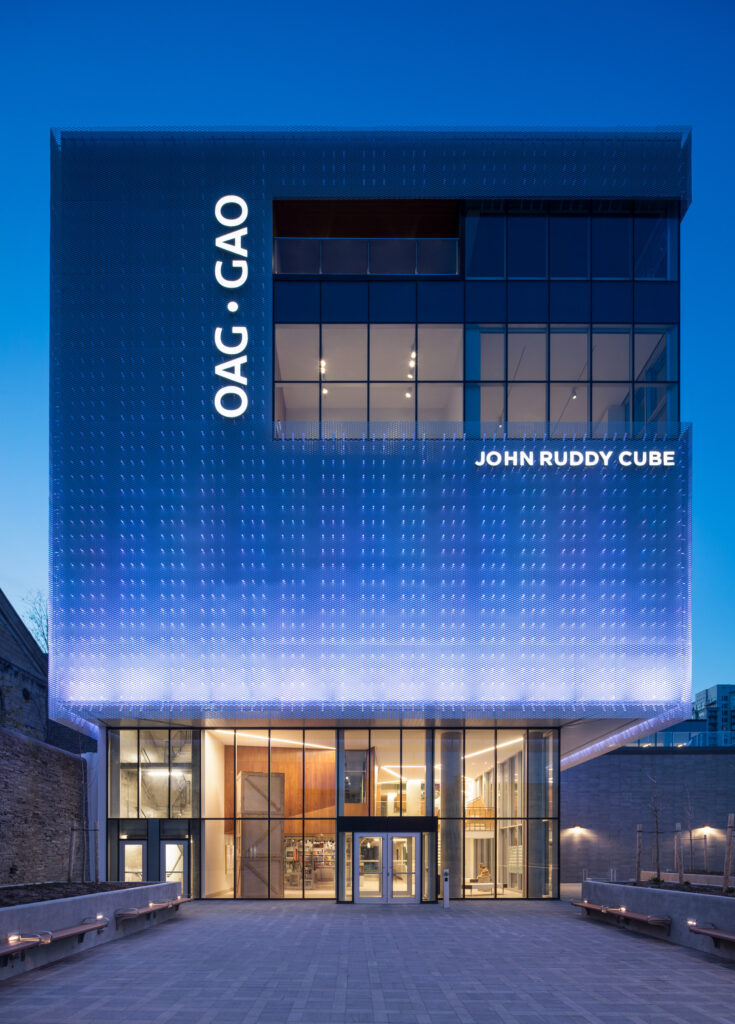
The last finishing detail to consider with expanded mesh is lighting. These materials love light. The void, shadow, and reflection of these materials transform simple light into visual drama. Every good expanded mesh facade includes a well-thought-out lighting plan to highlight the texture of the material.
FAQ:
APEX03 and APEX01 are commonly used for parking garages because they strike a balance between opacity (hiding the chaos of cars and concrete) and airflow.
APEX03 Expanded Mesh Parking Garage Example: Santa Row
APEX01 Expanded Mesh Parking Garage Example: Cooksville Go Station
An AAMA 2605 powder coat will be required.
Yes, when used as a sunshade, expanded mesh reflects sunlight and reduces heat gain inside the building. Read the complete case study and calculations here.
Call 1.833.333.3902 or book a consultation to discuss your project at this link.